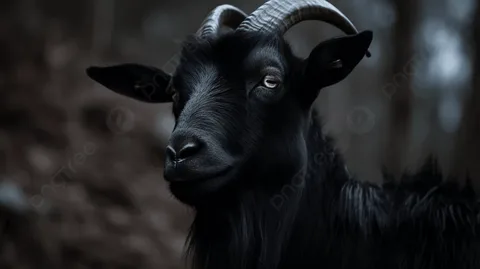
The term black goat may seem simple at first glance, but it represents an intriguing subject that spans multiple disciplines, including biology, agriculture, culture, religion, folklore, symbolism, and language. This article explores the black goat from every possible angle so that you gain a full understanding of its physical characteristics, breeds, behaviors, roles in human societies around the world, symbolic interpretations, and practical uses. The goal is to create the most comprehensive resource available on the subject, written clearly and precisely, without unnecessary repetition or references to news or outside sources. This content is original, structured, and easy to follow.
Overview of Goat Species and the Black Phenomenon
Goats are among the earliest domesticated animals in human history. Belonging to the species Capra aegagrus hircus, they are versatile animals capable of adapting to diverse environments ranging from mountainsides to arid plains. Within this species, goats exhibit remarkable diversity in size, shape, and coloration. One of the most visually striking varieties is the black goat.
Black goats are not a single genetically isolated population; rather, “black” refers to a pigmentation trait that occurs in many breeds. The genetics of coat color are complex, involving multiple genes that control the production and distribution of melanin pigments. When these genes are expressed in certain combinations, they produce the deep, rich black coats seen in black goats.
The presence of black goats is not limited to any single region. They appear across Asia, Africa, Europe, and the Americas, often valued for their distinctive appearance as well as their hardiness in challenging environments.
Scientific Classification and Genetic Basis of Black Coat
The domestic goat falls under the broader family Bovidae, which also includes sheep, antelopes, and cattle. Within goats, coat color is primarily determined by multiple genetic loci that influence the type and amount of melanin produced.
Melanin comes in two main forms: eumelanin (black/brown pigment) and pheomelanin (red/yellow pigment). In goats with black coats, eumelanin production is predominant and widespread across the body. The genes that promote eumelanin synthesis are upregulated or unopposed by genes that would otherwise switch pigment production toward pheomelanin.
Understanding these genetic mechanisms is not only important for breed identification but also for selective breeding programs. Breeders interested in producing or maintaining black coat traits must pay close attention to the herd’s genetic history and breeding outcomes over generations.
Anatomical and Physiological Traits of Black Goats
Black goats share the same basic anatomical traits as other goats, but there are some characteristics that can correlate with the black coat, especially in specific breeds.
Black goats vary in size, typically ranging from medium to large, depending on breed. Their bodies are muscular and agile, well-adapted to climbing steep terrains and foraging over wide areas. The black coat itself can serve functional purposes in certain climates. For example, in some equatorial regions, a black coat may help with thermoregulation by facilitating rapid heat loss through radiation at night. The thick hair protects the animal from both sun exposure and cold mountain winds.
Internally, black goats possess efficient digestive systems specialized for a diet of tough shrubs, grasses, and various vegetation types. Their ruminant stomachs allow them to break down fibrous plant material effectively, making them ideal for environments where high‑quality forage is scarce.
Major Breeds Recognized for Black Coat Traits
Several recognized goat breeds are known for their distinctive black coloration. The following list provides detailed information about some of the most notable black or predominantly black goats from around the world.
Black Bengal Goat
The Black Bengal goat is a small to medium‑sized breed native to the Bengal region, including parts of Bangladesh and eastern India. This breed is prized for its fine, glossy black coat, although variations such as brown or gray may occur. It is known for its high reproductive rate and premium quality meat.
Key characteristics include excellent adaptability to local environments, resistance to many endemic diseases, and superior meat quality compared to larger commercial breeds. Black Bengal goats are also used for their skin, which can produce fine leather.
Zhiwulin Black Goat
Originating in specific regions of China, the Zhiwulin Black goat is another breed known for its striking black coat. These goats are raised primarily for both meat and cashmere production. Their undercoats are exceptionally fine, yielding high‑quality fibers that are used in luxury textiles.
This breed thrives in harsh, mountainous environments and is valued for its resilience and strong foraging capabilities. The black outer coat helps the animal blend into its natural rocky and shadowy surroundings, potentially offering camouflage from predators.
Nera Verzasca Goat
The Nera Verzasca goat hails from the Verzasca Valley region in Switzerland. It is known for its jet‑black coat, which often remains deep black throughout the goat’s life. These goats are medium in size with sturdy bodies, making them ideal for hilly terrains.
While not as widespread as some other black breeds, the Nera Verzasca is valued for its dual‑purpose utility, providing both milk and meat. It also contributes to maintaining biodiversity in its native region.
Other local and regional black goat populations exist in various parts of Africa, the Middle East, and Central Asia. In many cases, these goats are not formalized into standardized breeds but are recognized by their distinctive coloration and adaptability to local conditions.
Behavior and Social Structure
Goats are social animals that thrive in herds. Within a group, they establish social hierarchies and communicate through a variety of vocalizations, body language, and scent marking.
Black goats exhibit the same behavioral traits as other goats. They are naturally curious and intelligent, often exploring their environment and interacting closely with other members of the herd. They also display complex social behaviors such as dominance, submission, and cooperative care of young in some groups.
During grazing, goats can cover extensive distances in search of food. Their browsing habits make them particularly important in controlling invasive vegetation and maintaining ecological balance in some landscapes.
Feeding and Nutrition
Black goats are ruminants, meaning their stomachs are divided into four compartments designed to efficiently process plant materials. Their diet typically consists of grasses, shrubs, leaves, and bark. They may also consume agricultural by‑products and supplementary feeds provided by farmers or herders.
Nutrition plays a critical role in the health and productivity of goats. Adequate protein, minerals, and vitamins are essential for reproductive success, lactation, and the growth of young goats. In regions where forage quality is low, supplemental feeding ensures goats maintain body condition and avoid deficiencies.
Habitat and Environmental Adaptation
Black goats can be found in diverse habitats, from mountainous regions to semi‑arid plains. Their ability to adapt to extreme conditions is one of their defining features. Their hooves are well‑suited for navigating rocky terrains, and their digestive systems allow them to extract nutrients from low‑quality forage.
Some black goat populations are specifically adapted to high altitude environments, where temperatures can vary greatly between day and night. In such conditions, the coat provides insulation, and behavioral adaptations such as seeking shade or shelter help regulate body temperature.
Reproductive Biology and Lifecycle
Goats reach sexual maturity at a young age compared to many livestock species. Females typically experience estrus cycles several times per year, and with appropriate management, they can produce multiple offspring throughout their reproductive lifespan.
Gestation lasts approximately five months. Twins are common in many goat breeds, and triplets are not unusual in highly fertile populations. Careful observation of pregnant goats is essential to ensure successful births and healthy kids.
After birth, young goats (kids) are nursed by their mothers. Proper nutrition, hydration, and protection from extreme weather are crucial during the early stages of life. Many herders implement systematic breeding programs to improve herd genetics over successive generations.
Economic Importance and Uses
Goats, including black goats, serve many economic roles in human societies.
Meat Production: Goat meat, known as chevon or mutton (depending on age), is a staple source of protein in many regions. Black goats specifically are prized in certain markets for their meat quality and distinct flavor profile.
Fiber and Wool: Some black goats, such as those producing fine undercoats suitable for cashmere, contribute to the textile industry. High‑quality fibers are hand‑combed or sheared and used in luxury apparel.
Milk and Dairy Products: Goat milk is easily digestible and widely consumed. It is also used to manufacture cheeses, yogurts, and other dairy products. Certain black goat breeds provide milk with favorable fat and protein compositions.
Leather and Skins: Goat hide, when properly processed, yields durable leather used in clothing, accessories, and artisanal crafts.
Ecological Services: Goats are used in sustainable land management practices. Their browsing helps control invasive plant species and reduce wildfire fuel loads in some regions.
Cultural and Historical Significance
Throughout human history, goats have occupied prominent roles in various cultures. They appear in mythologies, religious narratives, folklore, and traditional practices.
In some cultures, black goats are associated with strength, resilience, or the ability to thrive in adverse conditions. In others, they may symbolize fertility or independence due to their reproductive success and agile nature.
The presence of goats in ancient agricultural communities underscores their importance as one of the earliest domesticated animals. Their adaptability and utility helped early civilizations survive and expand into new territories.
Symbolism and Interpretation in Global Traditions
Symbolic meanings attributed to black goats vary across cultures and belief systems. These interpretations are not universal; they reflect the values, environmental contexts, and mythologies of specific communities.
In certain traditions, the black goat may be seen as a symbol of vitality and endurance. Its ability to thrive where other animals struggle can be interpreted metaphorically as resilience in life’s challenges.
In other contexts, black animals often carry connotations relating to mystery or the unknown. This symbolism does not inherently denote negative meaning; rather, it often reflects the awe and respect humans feel toward nature’s diversity.
Symbolic interpretations may also connect to agricultural calendars, seasonal cycles, or spiritual rituals that emphasize harmony between human communities and the animal world.
Misconceptions and Clarifications
Because goats feature so prominently in folklore and symbolic storytelling, misconceptions can arise. It is important to differentiate between metaphorical or mythological references and biological realities.
For example, some narratives may attribute supernatural qualities to black goats, but such interpretations belong to cultural storytelling, not scientific understanding. The biology of black goats is rooted in genetics, anatomy, and ecology, while cultural meanings emerge from human imagination and social tradition.
Goats in Modern Times: Roles in Sustainable Agriculture
In the context of modern agriculture, goats have gained renewed attention for their sustainability benefits. Compared to larger livestock such as cattle, goats require less land, feed, and water. They convert low‑quality forage into valuable products, making them ideal for integrated farming systems.
Black goats, like other goats, fit well into diversified farm operations. They can be part of mixed livestock systems, agroforestry practices, and community‑based livestock programs aiming to improve nutritional security and income for smallholder farmers.
Because goats are efficient browsers, they help maintain vegetation balance and reduce reliance on chemical controls in certain landscapes. However, responsible grazing management is essential to prevent overbrowsing and soil degradation.
Health and Veterinary Care
Maintaining the health of black goats requires attention to nutrition, parasite control, vaccination, and housing. Regular deworming schedules help prevent internal parasite burdens, which can sap energy and lower productivity.
Vaccination protocols protect goats from common infectious diseases that vary by region. A veterinarian experienced in caprine health is an invaluable partner for herd management.
Good housing protects goats from extreme weather, predators, and disease vectors. Clean bedding, proper ventilation, and secure fencing all contribute to herd wellbeing.
Breeding Strategies and Genetic Improvement
Selective breeding allows goat producers to enhance specific traits such as coat quality, growth rates, milk yield, and disease resistance. In the case of black goats, maintaining consistent pigmentation may be a breeding objective, but it must be balanced with overall animal health and productivity.
Breeding decisions should be based on careful record‑keeping and long‑term goals. Genetic diversity helps reduce the risk of inherited diseases and maintains adaptive potential in changing environments.
Market Considerations and Consumer Demand
The market for goat products varies widely by region and culture. In some areas, goat meat is the preferred protein source due to taste preferences and cultural traditions. In others, goat milk products are valued for their nutritional qualities and digestibility.
Understanding consumer demand helps producers make informed decisions about herd size, product types, and marketing strategies. Black goats may command premium prices in niche markets where distinctive appearance and perceived quality influence buyer choices.
Environmental and Ethical Concerns
As with any livestock production system, environmental and ethical considerations should guide management practices. Sustainable grazing practices, humane handling, and responsible breeding all contribute to ethical livestock stewardship.
Goat populations must be managed in ways that prevent habitat loss, soil erosion, and biodiversity decline. Integrating goats into holistic land‑use plans can help balance agricultural needs with ecological protection.
Future Prospects and Research Directions
Interest in black goats and goats in general continues to grow as societies seek sustainable food systems and resilient agricultural practices. Future research may explore improved breeding techniques, climate adaptation strategies, and expanded uses for goat‑derived products such as fibers and specialty dairy items.
Advances in genetic science could help clarify how coat color interacts with other traits, enabling better breeding programs. Additionally, studies on goat behavior, ecology, and nutrition will further enhance our understanding of these remarkable animals.
Conclusion
The black goat is much more than a simple term; it represents a window into the complex interplay between biology, culture, economy, and symbolism. From its genetic roots to its role in diverse human societies, the black goat embodies adaptability, utility, and meaning in many forms.
Whether considered for its practical contributions to agriculture, its symbolic resonance across world traditions, or its place in sustainable livestock systems, the black goat offers abundant avenues for exploration and appreciation. This comprehensive guide provides a foundation for understanding the subject in depth, with factual clarity and cultural sensitivity.
If you wish, I can also provide illustrative diagrams, genetics tables, or specific regional case studies to further enrich this comprehensive content.
