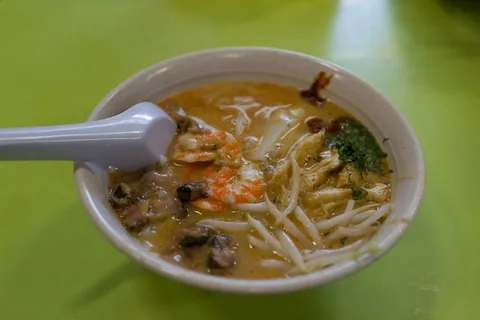
Sungei Road Laksa is one of Singapore’s most iconic and beloved hawker dishes. More than just a bowl of spicy noodle soup, it tells a story of heritage, tradition, ingenuity, and the vibrant food culture that defines Singapore. In this comprehensive guide, we explore every aspect of Sungei Road Laksa — from its origins and ingredients to the unique cooking techniques, flavor science, regional comparisons, dining tips, and cultural significance.
If you want to understand why this humble laksa has captivated locals and visitors alike, this article is your definitive resource.
What Is Sungei Road Laksa? A Deep Dive Into the Dish
Sungei Road Laksa is a version of laksa — spicy noodle soup — that stands out because of its unique preparation method, distinctive flavor profile, and cultural roots. Unlike other laksa varieties, it is cooked using charcoal, which infuses the broth with a smoky richness that cannot be replicated with gas or electric heat.
This laksa bowl typically includes rice vermicelli (bee hoon), a rich coconut‑infused broth, fish cake slices, cockles, bean sprouts, laksa leaves (also known as daun kesum), and prawn paste. The combination of ingredients and the slow, charcoal‑driven cooking process creates a deeply aromatic, bold, and complex flavor that is both comforting and exhilarating.
Sungei Road Laksa has become more than a meal — it’s a culinary experience rooted in local food culture and heritage.
The Origins and History of Sungei Road Laksa
To appreciate Sungei Road Laksa, you must understand its history.
The Birth of a Hawker Legend
The history of Sungei Road Laksa traces back to the days when Sungei Road itself was a bustling area filled with secondhand goods markets, hawkers, and a melting pot of cultures. Long before the area was redeveloped, Sungei Road was what many called the real heartbeat of Singapore — raw, dynamic, and authentic.
It was in this environment that laksa hawkers began setting up portable stalls, serving bowls of noodle soup to market workers, traders, and early risers. Over time, one particular laksa stall gained a reputation for its remarkable broth and consistent flavor, drawing queues that started early in the morning and stretched into the day.
Why Charcoal Matters
The choice of charcoal as the heat source wasn’t just traditional — it was practical. Gas and electricity were not widespread, and charcoal was readily available, cheap, and capable of producing the intense, consistent heat needed to extract maximum flavor from the broth.
Decades later, even as modernization changed many hawker kitchens, Sungei Road Laksa hawkers retained the charcoal method. The result is a bowl of laksa with a depth of flavor and aroma that modern methods struggle to match.
Evolution Through Generations
Sungei Road Laksa didn’t stay static. As the city grew and tastes evolved, so did the stall’s approaches to ingredients and presentation, while still holding on to core traditions. Many regulars attribute their loyalty not just to the taste — but to the sense of continuity and cultural memory it represents.
The Essential Ingredients That Make Sungei Road Laksa Special
The magic of Sungei Road Laksa lies in the harmony of its ingredients. Each component plays a vital role in creating the signature sensory experience.
Rice Vermicelli (Bee Hoon)
The base of the dish is rice vermicelli, also known as bee hoon. Light, slightly chewy, and delicate, rice vermicelli absorbs the rich flavors of the broth without becoming mushy. The choice of rice noodles is deliberate: they allow the broth to shine while maintaining a satisfying texture.
The Broth: Heart of the Dish
The broth is arguably the most critical element. It’s made from a blend of:
- Coconut milk — rich, creamy, and subtly sweet
- Prawn heads and shells — for deep umami
- Spices such as turmeric, galangal, lemongrass, and chili — for aromatic complexity
- Fish stock or dried anchovies — for body and depth
This broth is simmered slowly over charcoal, allowing each ingredient to release its essence fully.
Proteins and Toppings
Traditional Sungei Road Laksa includes:
- Cockles — briny, sweet, and slightly chewy
- Fish cake slices — mild, springy, and texturally contrasting
- Bean sprouts — for freshness and crunch
- Laksa leaves (daun kesum) — imparting a signature citrusy aroma
Some stalls may add prawns or tofu puffs, but the classic combo stays true to simplicity and balance.
Chili Paste and Garnishes
A bold chili paste, often blended fresh with garlic, dried shrimp, and vinegar, is served alongside or mixed into the broth. Lime wedges and coriander leaves add brightness.
The Charcoal Cooking Technique: A Signature Advantage
The charcoal cooking method is more than tradition — it’s a culinary advantage that defines the flavor.
Why Charcoal Infuses Better Flavor
Charcoal’s intense, uneven heat promotes:
- Caramelization of spices and aromatics
- Smoky undertones in the broth
- Slow, gentle extraction of flavors from coconut milk and prawn stock
Compared to gas or induction stoves, charcoal generates complex chemical reactions in the broth that elevate everything — from mouthfeel to aroma.
Mastering Heat Management
Controlling charcoal heat requires experience. Too much heat can break down the coconut milk, causing separation; too little heat under‑extracts flavors.
Veteran laksa hawkers “read” their fire like musicians read a score — adjusting airflow, repositioning coals, tweaking pot height — all to coax the perfect simmer.
The Impact on Broth Texture
Charcoal simmering results in a broth that is:
- Creamier
- More aromatic
- Richer in umami
- Smoother on the palate
It’s not just cooking — it’s craft.
Step‑by‑Step Preparation of Authentic Sungei Road Laksa
Here is a breakdown of how the broth and laksa bowl come together, highlighting the techniques that make it distinct.
1. Preparing the Stock
The stock begins with prawn heads and shells:
- Remove water and excess membrane from prawn heads.
- Roast lightly to deepen flavor.
- Simmer in water with dried anchovies for hours.
- Skim foam to keep clarity.
- Blend with coconut milk carefully, maintaining gentle heat.
2. Creating the Spice Base
A homemade spice paste is essential:
- Roast dried chilies and galangal.
- Blend with turmeric, lemongrass, garlic, and shallots.
- Fry the paste slowly in oil until fragrant.
- Add to the simmering stock and incorporate evenly.
3. Managing the Laksa Pot Over Charcoal
The pot is positioned above glowing coals, not open flames:
- Use a grate or metal stand to balance distance.
- Stir regularly to prevent sticking.
- Adjust coals to maintain an even simmer.
This patience yields a deeply infused broth.
4. Noodles and Assembly
Rice vermicelli is blanched separately to avoid mushiness, then topped with:
- Cockles
- Fish cake slices
- Bean sprouts
- Laksa leaves
Broth is ladled over, and chili paste is added according to taste.
5. Final Touches and Serving
A squeeze of lime or calamansi brightens the bowl. Fresh herbs lift aroma and flavor.
No two bowls are identical — subtle variations in chili heat or broth density reflect the cook’s skill and conditions of the day.
Flavor Profile Breakdown: What Makes the Bowl Work
To understand why Sungei Road Laksa is so satisfying, we can dissect its key sensory elements.
Aromatic Complexity
The broth carries notes of:
- Coconut creaminess
- Smoky charcoal essence
- Herbal freshness from laksa leaves
- Spicy warmth from chili paste
This layered aroma invites every sense before the first sip.
Texture Harmony
A great bowl achieves balance:
- Soft noodles
- Tender cockles
- Slight crunch from bean sprouts
- Velvety broth that clings to noodles
Every mouthful combines with textural balance and flavor contrast.
Heat and Spice Balance
The chili paste can be adjusted, but the goal is harmony:
- Heat without overwhelming
- Chili flavor that complements, not masks
- Tingling warmth that enhances the broth’s richness
This is not just “spicy for spice’s sake” — it’s calibrated.
How Sungei Road Laksa Compares to Other Laksa Styles
Laksa is not a single dish — it has regional interpretations. Here is how Sungei Road Laksa differs from others:
Sungei Road Laksa vs Katong Laksa
| Aspect | Sungei Road Laksa | Katong Laksa |
|---|---|---|
| Broth Source | Charcoal simmered | Generally gas/electric |
| Flavor | Smokier, deep | Rich, creamy, slightly sweet |
| Noodles | Rice vermicelli | Often cut shorter |
| Origin | Hawker heritage | Urban Peranakan roots |
Sungei Road’s signature smokiness sets it apart.
Sungei Road Laksa vs Nonya Laksa
Nonya laksa often includes ingredients like:
- Belacan (fermented shrimp paste)
- Tamarind tang
- Coconut milk richness
While both can be spicy and savory, Nonya laksa leans more toward balanced sweetness and sourness, whereas Sungei Road laksa emphasizes smoky, concentrated umami.
Sungei Road Laksa vs Curry Laksa
Curry laksa tends to include:
- Curry powder
- Coconut cream
- Chicken or prawns
Sungei Road laksa holds its own by relying less on curry spice and more on broth depth and charcoal infusion.
The Cultural Importance of Sungei Road Laksa
This dish is more than a meal — it’s cultural heritage.
A Symbol of Hawker Culture
In Singapore, hawker food is part of everyday life. Sungei Road Laksa embodies:
- Oral tradition
- Multi‑ethnic influences
- Community gathering
For many locals, this bowl evokes memory and identity.
Preserving Food Heritage
With rapid urban development, many traditional hawker sites have disappeared. Sungei Road Laksa stands as a reminder that food heritage must be preserved intentionally.
Intergenerational Connection
Families bring children and grandchildren to introduce them to this taste — a rite of passage for some.
Where and When to Eat Sungei Road Laksa
Best Time to Visit
The stall usually opens early morning. Lines form fast. For best experience:
- Arrive early
- Avoid peak lunch hours
- Expect a bit of waiting — but worthwhile
What to Expect in Queue Culture
Queues are part of the experience. Locals may chat, share tips, and regulars often recognize each other.
Good queue etiquette keeps the environment friendly.
Dining Etiquette and Tips
To fully enjoy your laksa:
- Mix chili paste gradually — heat can be strong
- Taste broth first before adding condiments
- Try slurping noodles — it enhances flavor
- Respect hawker norms — clear tables, share space
Health Considerations
While rich and indulgent, there are ways to make mindful choices:
- Control chili paste quantity for spice tolerance
- Balance portion with side vegetables
- Recognize that coconut milk adds calories — but is rich in healthy fats
Common Myths and Misconceptions About Sungei Road Laksa
Myth: It’s Just Spicy Soup
Truth: It’s a complex blend of flavors, not defined by spiciness alone.
Myth: All Laksa Is the Same
Truth: Every laksa style has unique identity shaped by ingredients and region.
Myth: Charcoal Only Adds Smoke
Truth: It enhances flavor extraction and texture in ways modern stoves cannot easily replicate.
Frequently Asked Questions About Sungei Road Laksa
Is it very spicy?
Spice levels vary, but you can control heat by adjusting chili paste.
Can vegetarians enjoy it?
Traditional version uses seafood stock. Vegetarian versions are uncommon.
Why is charcoal cooking important?
It influences flavor, aroma, and richness, making the bowl distinctive.
Why This Dish Is Worth Traveling For
Food enthusiasts often travel specifically to taste authentic Sungei Road Laksa because:
- The charcoal‑infused broth
- The local heritage experience
- The perfect balance of flavors and textures
It’s not just food — it’s an adventure.
How to Write About Sungei Road Laksa for Maximum Reader Engagement
If you’re creating content about Sungei Road Laksa:
- Use vivid sensory language
- Include cultural context
- Provide practical tips
- Add visuals of cooking process and ingredients
- Feature personal stories or interviews
Conclusion: Sungei Road Laksa as a Culinary Icon
Sungei Road Laksa is a testament to authentic hawker culture, culinary craftsmanship, and cultural continuity. It reflects Singapore’s diversity, creativity, and appreciation for flavor tradition. Whether you’re a local food lover or a traveler seeking real culinary experiences, this laksa is a dish that defines memories.
